Partners & News
What Are the Symptoms of Low Testosterone? Signs Men Shouldn't Ignore
Testosterone declines gradually — and the signs are easy to mistake for stress or aging. Here's what low testosterone actually looks like, why it's more common than it used to be, and what a clinician-supervised evaluation involves.
Axis Metabolics · October 16, 2026 · 3 min read
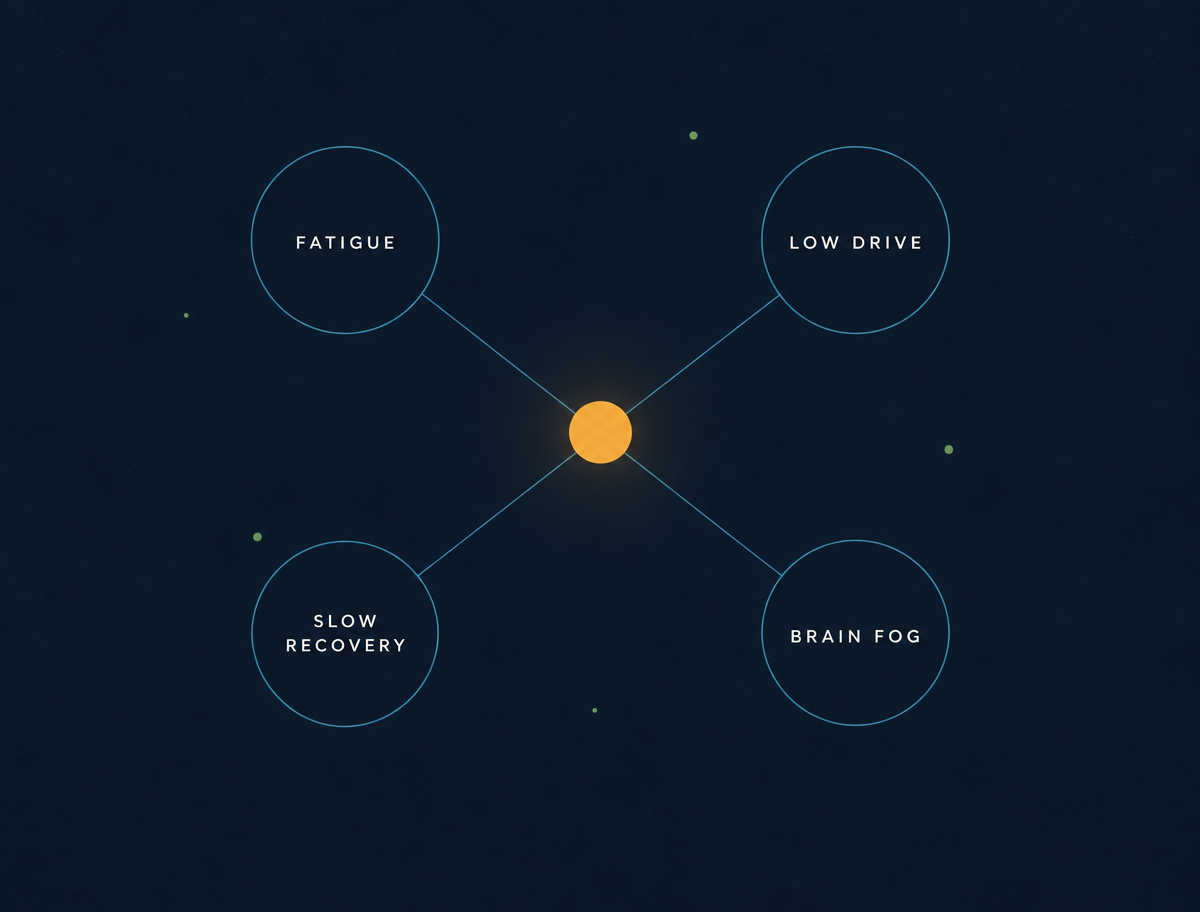
It rarely announces itself
Low testosterone almost never shows up as one dramatic symptom. It shows up as a slow drift: workouts that used to feel good now feel like a chore, the afternoon wall hits harder than it used to, and the drive — in the gym, at work, in the bedroom — isn't what it was.
Because every one of those signs can be explained away as stress, poor sleep, or "just getting older," most men wait years before anyone actually checks.
The most common symptoms
Testosterone touches nearly every system in the body, so low levels tend to show up in clusters rather than isolation:
- Persistent fatigue — not sleepy-tired, but a flat, low-voltage feeling that rest doesn't fix
- Loss of muscle and strength — training the same (or more) but getting softer and weaker
- Increased body fat, especially around the midsection, that doesn't respond to the usual efforts
- Reduced libido and changes in sexual function
- Brain fog and low motivation — trouble focusing, less competitive edge, a flatter mood
- Poor recovery — soreness lingers, sleep feels less restorative
- Irritability or low mood that's out of character
None of these alone proves low testosterone. They overlap with thyroid issues, poor sleep, chronic stress, and plain overtraining — which is exactly why guessing doesn't work and testing does.
Why levels are lower than they used to be
This isn't just about aging. Population studies have found that average testosterone levels in men have declined meaningfully over the past few decades — a man in his 40s today tends to have lower levels than a man in his 40s a generation ago, at the same age.
Researchers point to a mix of modern-life factors:
- Chronic stress and elevated cortisol, which directly suppresses testosterone production
- Poor sleep — most daily testosterone release happens during sleep
- Carrying extra body fat, which converts testosterone into estrogen
- Sedentary work and less daily physical labor
- Environmental exposures, including endocrine-disrupting chemicals in plastics and personal care products
- Ultra-processed diets low in the micronutrients hormone production depends on
The practical takeaway: some decline is driven by age, but a meaningful share is driven by inputs you can actually change — and those are worth addressing whether or not levels turn out to be low.
What you can do before (and regardless of) treatment
The foundations matter more than any single intervention:
- Strength train consistently. Progressive resistance training is one of the most reliable natural signals for the body to maintain muscle and support healthy hormone levels.
- Eat like it matters. Adequate protein, enough total calories, and whole foods — not crash diets, which can suppress testosterone further.
- Protect sleep. Seven to nine hours isn't a luxury; it's when the hormone machinery runs.
- Manage stress deliberately. Chronic cortisol and healthy testosterone don't coexist well.
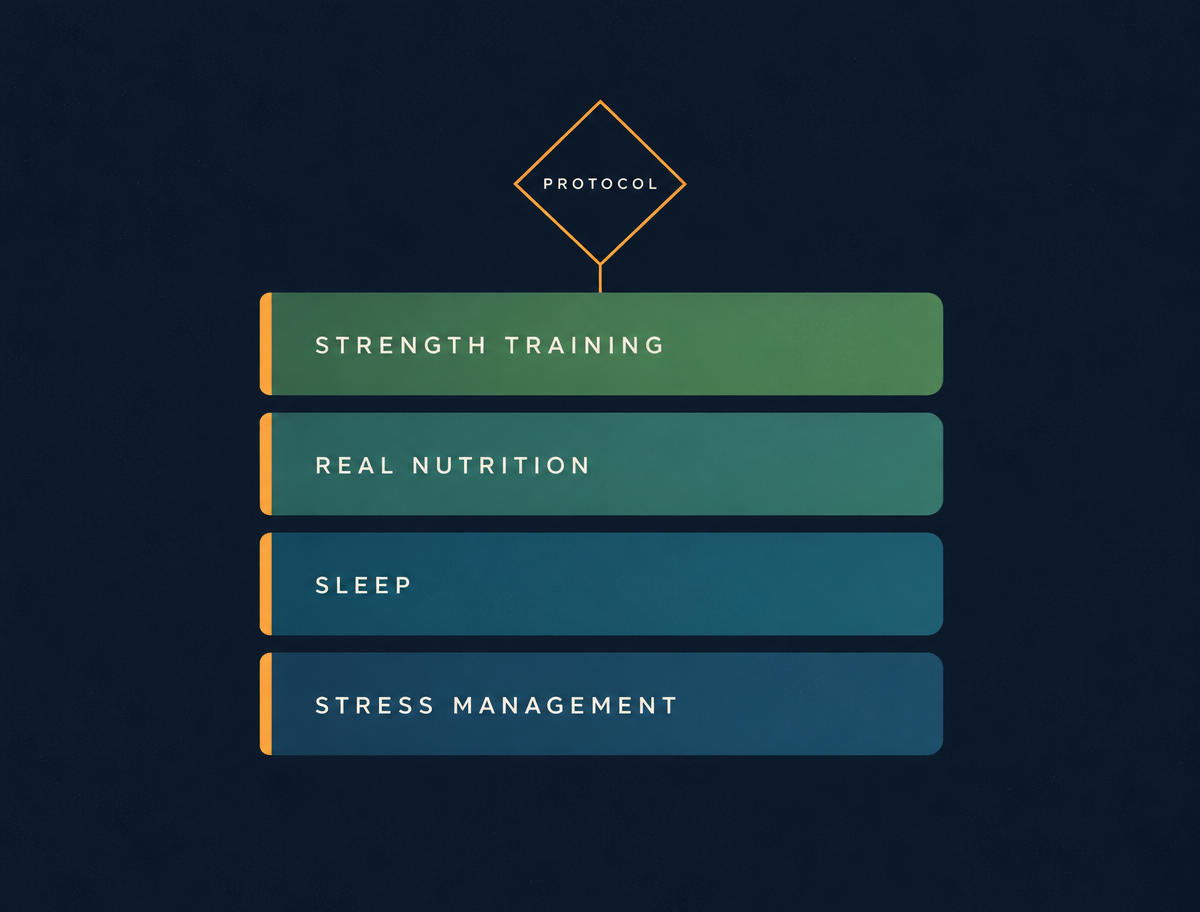
These are the same pillars we build every Axis protocol around — because whether or not a clinician ultimately recommends a hormone protocol, the results only hold when the foundation is there.
When it's worth getting evaluated
If several of the symptoms above sound familiar and they've persisted for months — not weeks — that's a reasonable time to stop guessing. A proper evaluation isn't a single blood draw read in isolation: a licensed clinician reviews your symptoms, health history, and lab results together, because the same number can mean different things in different men.
If a hormone protocol is appropriate, that determination is made by an independent licensed clinician after reviewing your history and labs — never by a quiz, an article, or a score. And if it isn't appropriate, you still walk away knowing where you stand and what to work on.
Curious where you stand? Download the Men's Hormone & Vitality Checklist for a structured self-assessment, or take the protocol quiz to see which directions a clinician might explore with you.
Axis Metabolics is not a medical practice and does not provide medical advice. All protocols are determined by independent licensed clinicians after reviewing your health history and lab work.
Not sure where to start?
Find your protocol
A 60-second quiz showing which protocols are worth discussing with a clinician.
Take the protocol quizTrain with a partner?
Claim your discount
Members and clients of our partner gyms, trainers, and coaches get a one-time discount on their clinical protocol.
Claim your discountKeep reading