Partners & News
Perimenopause Symptoms: The Signs Most Women Miss
Perimenopause often starts years — even a decade — before menopause. Shifting cycles, broken sleep, mood changes: the signs most women miss, and what to do about them.
Axis Editorial Team · October 18, 2026 · 3 min read
It starts years before menopause — and rarely announces itself
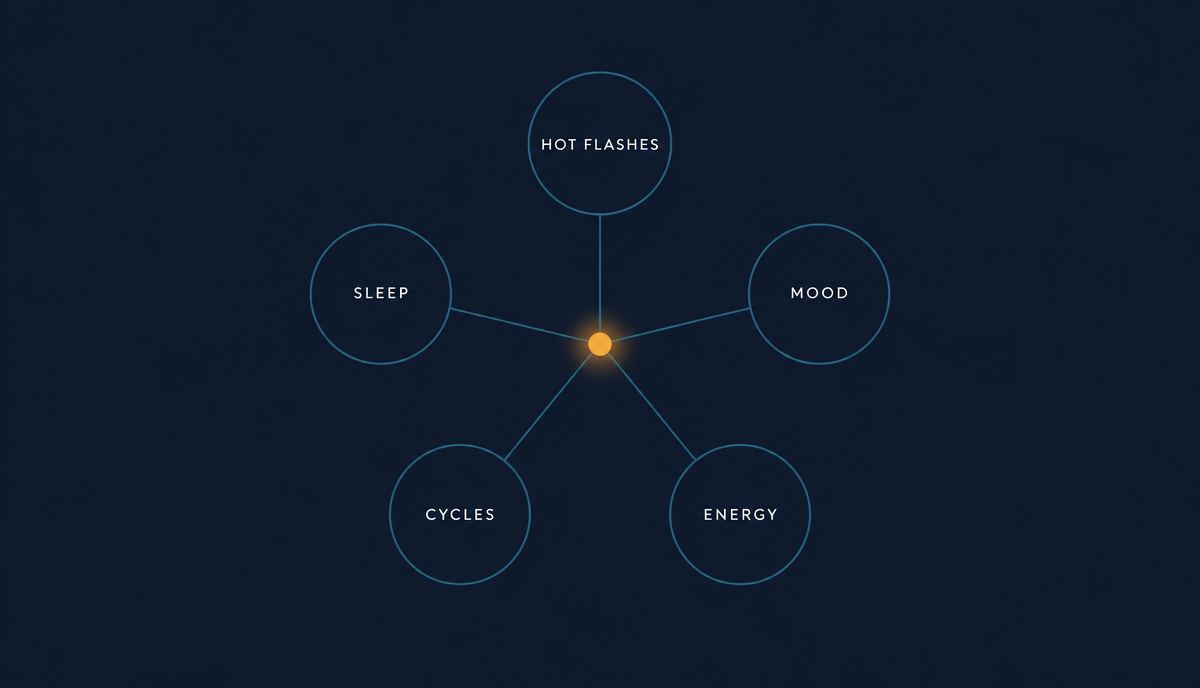
Perimenopause almost never starts with a dramatic moment. It starts with small things that are easy to explain away: a cycle that's suddenly a few days off, a night of waking at 3 a.m. for no clear reason, a shorter fuse, an afternoon where your energy simply isn't there.
Here's the part most women miss: perimenopause isn't the few months right before menopause. It's the long runway leading up to it — commonly several years, and for many women closer to a decade. That means the changes can begin in your late thirties or early forties, while your cycles are still regular and menopause still feels like a distant, someday topic.
Because each sign is easy to dismiss on its own — and because "you're too young for that" is still a common response — many women spend years being told, or telling themselves, that it's just stress, just aging, just a busy season. Often, it isn't. It's hormones beginning a shift that will span years.
The signs most women miss
Cycles that change character. Shorter, longer, heavier, lighter, or simply less predictable. A changing cycle is often the earliest measurable sign — and the one most often waved away.
Sleep that stops working. Falling asleep fine but waking in the small hours, or sleeping through and still waking exhausted. Progesterone is one of the body's natural calming signals, and it's usually the first hormone to decline.
Mood that doesn't feel like you. Irritability, anxiety, or a flatness that's out of character. This isn't a personality change — it's neurochemistry responding to fluctuating estrogen.
Energy and recovery that lag. Workouts that used to leave you stronger now leave you drained. Muscle is slower to build and quicker to lose, which is why strength training matters more in this decade, not less.
Hot flashes and night sweats. The classic sign — but often one of the last to appear, not the first. If you're waiting for hot flashes to tell you something is changing, the transition may already be years along.
What's actually happening
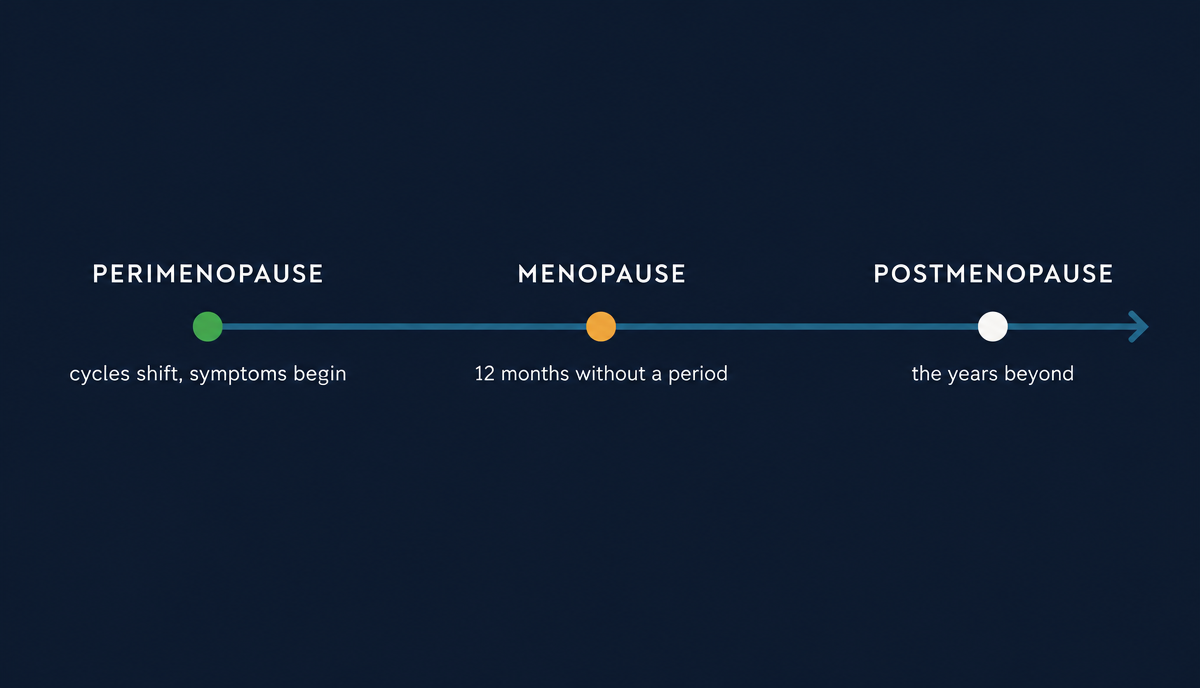
Menopause itself is a single point in time — twelve consecutive months without a period, with the average age around 51. Perimenopause is everything on the road there: the years when estrogen and progesterone don't decline smoothly but swing up and down. That swinging is why symptoms can come and go, why one month can feel dramatically different from the next, and why a single "normal" lab result doesn't rule anything out.
It also means the most symptomatic years are usually not the years after menopause — they're the years before it. Fluctuating hormones are often harder on the body than the lower-but-steadier levels that follow the transition. Understanding that the runway can span a decade reframes the whole experience: this isn't a rough season to push through, it's a stage of physiology worth actively supporting — early.
What you can do now
The foundation is the same one the Axis Framework is built on:
- Strength training. Muscle is protective — for bone density, blood sugar, and metabolism. Two to three sessions a week changes the trajectory of this decade.
- Real nutrition. Enough protein, enough food, no crash diets. Under-fueling amplifies every symptom on the list above.
- Sleep and stress. Not as soft advice — as physiology. Cortisol and shifting sex hormones compete, and sleep is where that battle is won or lost.
For many women, the foundation isn't the whole answer. That's where clinician-reviewed protocols come in: a licensed clinician reviews your history and the lab work your protocol requires, and determines what — if anything — is appropriate. No protocol is guaranteed, and no one size fits anyone.
Start with the checklist
If three or more of the signs above sound familiar — at any age, even while your cycles are still regular — the Women's Hormone Health guide includes a printable symptom tracker you can bring to any conversation about your care. And if you want to see which protocols may be relevant to your goals, take the protocol quiz — a clinician makes every final determination after reviewing your history and panels.
> A note on care: Axis Metabolics does not practice medicine. Protocols and lab work are reviewed and approved by an independent licensed clinician based on your history and the panels your protocol requires.
Not sure where to start?
Find your protocol
A 60-second quiz showing which protocols are worth discussing with a clinician.
Take the protocol quizTrain with a partner?
Claim your discount
Members and clients of our partner gyms, trainers, and coaches get a one-time discount on their clinical protocol.
Claim your discountKeep reading